.jpg)
The Patriot Games: May The Odds Be In Our Favor

Yes, you are reading this correctly. The Patriot Games are real and apparently happening next month.

In celebration of America’s 250th birthday, President Donald Trump has announced the first annual Patriot Games, which is a televised athletic competition and scholarship program. The Freedom 250 nonpartisan organization organized this event for high school students between the ages of 14 and 17, as they will compete in a series of athletic and mental challenges to win a $250,000 scholarship prize pool. The “military-inspired boot camp circuit” will be set at Spire Academy (a boarding school in Geneva, Ohio) from August 9th to August 11th of this year.
One male and one female athlete will be selected to represent each state, territory, and tribal nation. However, transgender people will notably not be permitted entry into the competition. Reporting indicates that the administration will select the winners from each state/territory from the pool of high school-aged applicants, which will thus determine who participates in the upcoming event. If selected to participate, parents or legal guardians must approve of the child’s participation and accompany them for the duration of the event.
The competition’s events will be streamed on the ESPN App, while the finale will stream on ABC on August 13th through a one-hour primetime special. Emblematic of American TV competition shows, the finalists will compete in an obstacle course resembling those of American Ninja Warrior and American Gladiators to test the players’ strategy and skill.
According to the America250 spokeswoman Danielle Alvarez, this televised event was President Donald Trump’s idea, as he wanted to highlight America’s next generation.
“Our nation’s 250th birthday is more than a celebration of our past. It’s a call to inspire the next generation of leaders, innovators, and patriots. The 2026 Patriot Games will showcase the character, talent, and determination that define the American spirit, and we are proud to bring that story to millions of families across the country.” — Keith Krach, Freedom 250 CEO
With one male and one female victor splitting $250,000 in scholarship funds, The Patriot Games is set to be another notch in the ongoing spectacle of patriotism and nationalism in the United States this year.

“Oh gosh! Well let me see. We’re not going to kill anybody. People are actually asking to be there. We don’t ask for tribute. We’re encouraging people to be healthy, to be fit, to compete, and to represent your state and your country well.” - Dean Cain
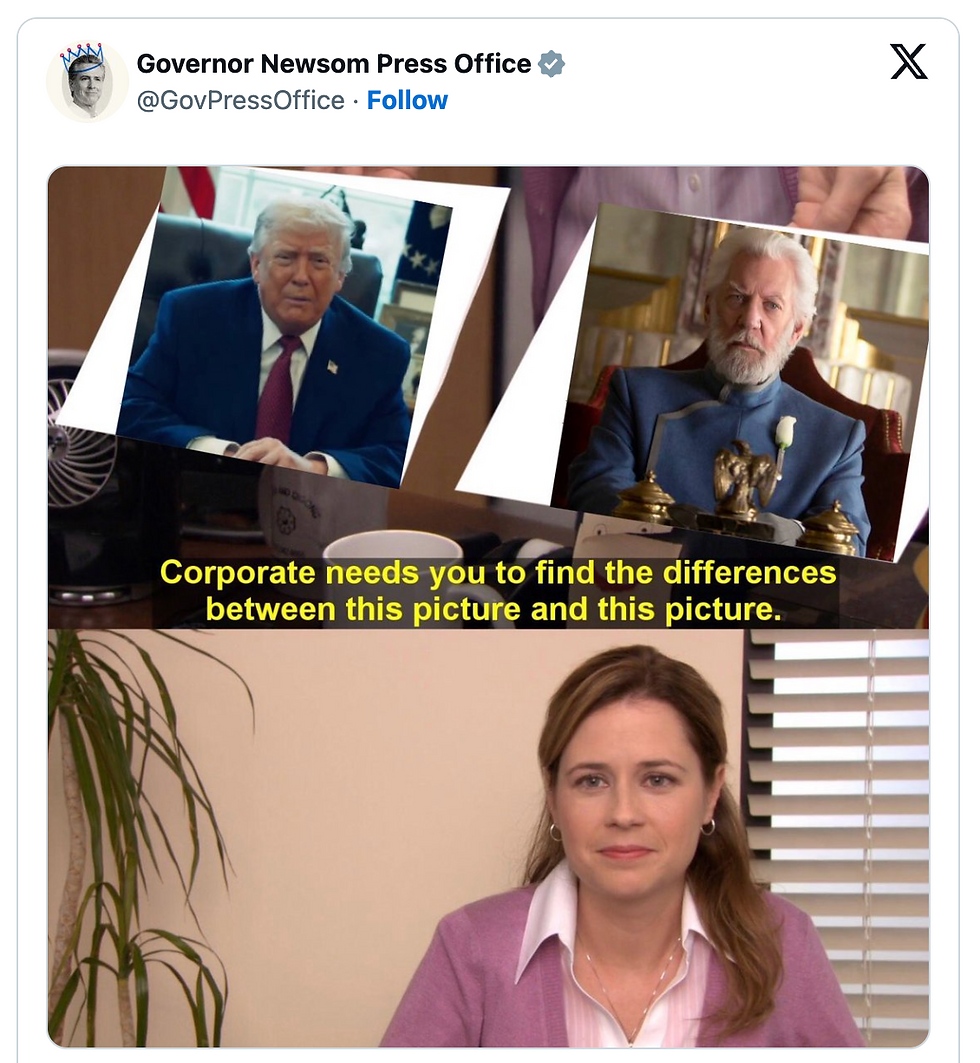
Touted to showcase the determination, teamwork, resilience, and hometown pride of America’s youth, this event also has an eerily dystopian feel to it. Comparisons between this upcoming event and the dystopian fiction series The Hunger Games, written by Suzanne Collins, can be perceived through a plethora of uncanny overlaps.

Suzanne Collins’ critically acclaimed dystopian young adult fiction series depicted a fictional totalitarian nation called Panem, in which a ruthless annual televised event took place. As punishment for a prior rebellion against the Capitol, The Hunger Games was an event that randomly selected one boy and one girl, between the ages of 12 and 18, from each of the post-apocalyptic nation’s twelve districts. The game of survival pitted all of the contestants against each other as they fought to the death inside an arena. Upon surviving, the victor would win a house for themselves and the families in their home district, which came with food, fame, and wealth.
The series’ protagonist, a 16-year-old Katniss Everdeen, volunteers to enter the Games on her sister’s behalf. However, I will clarify the term volunteer: she chooses to take her sister’s place, but the event as a whole is entirely mandatory. So the only choice offered to Katniss in that moment is between the potential death of her 12-year-old sister or her own potential death. The odds are truly not in Katniss’ favor.
In Panem, the Capitol rules over the twelve surrounding districts in a cruel manner, which is exemplified by the Hunger Games’ annual presence. Individuals in the Capitol lead an extravagant lifestyle of rampant consumption; however, those in the districts experience varying levels of inequality, with some districts living completely in poverty. Although the people of the twelve districts produce the goods and resources that the nation survives on, they only get minimal access - if any - to such outputs. Such a dynamic puts the districts at an extensive disadvantage, as the power imbalance allows the Capitol to wield tremendous power against its subjects. The Hunger Games’ intended goal of snuffing out future insurrections or rebellions from the districts’ people highlights the ways totalitarian governance permeates non-traditional means of control.

Although, thankfully, the upcoming Patriot Games are not a direct replication of Suzanne Collins’ novels, the event does highlight some of the underlying characteristics of nationalistic instruments utilized to strengthen authoritarian power.
As an ideology, nationalism derives from the theory that an individual’s loyalty and devotion to the nation-state goes above and beyond any other individual or group interests. Nationalism contrasts with patriotism, as nationalism demands that individuals make sacrifices for the superiority of a nation.
The nation of Panem is an example of a dystopian nationalist country, in which its people are deprived of their rights and resources while also being dominated by a set of powerful elites. For Panem, national identity and nationalism merge, as individuals surrender their own beliefs to a political leader. The façade presented by the Capitol illustrates a more vibrant future for Panem, yet the nationalistic rhetoric functions as a method to convince citizens to comply with the Capitol’s demands. Additionally, dissent has historically been publicly punished in Panem, as rebels and individuals who violate the rules of the regime are often publicly assaulted or killed in the televised games.
Similar to nationalism, politics relies, at least in part, on the hope of the people being governed.
“Hope, it is the only thing stronger than fear. A little hope is effective, a lot of hope is dangerous. A spark is fine, as long as it’s contained.” - President Snow (from Suzanne Collins’ The Hunger Games)
I would argue that beyond the perceived value of bolstering national pride through the Patriot Games, hope and potential monetary winnings for a deserving child function as valuable tools for promoting national unity. With over one hundred children likely entering the games next month, the overarching narrative of the event will likely highlight the hope and future triumph of America’s youth. While on paper these sound like great things of a patriotic nature, there is a lurking presence of utilizing such triumph as a facade that ignores the rampant inequality of today’s America.
Additionally, the televised nature of The Hunger Games, according to leaders in the Capitol, advertises district pride and national unity, which reinforces nationalism as it celebrates the districts’ powerlessness at the hands of the Capitol. Especially since choices are characteristically unavailable to the average citizen of Panem, the narrative constructed by the broadcasting of The Hunger Games overwhelms the narrative about what it means to be a person in Panem. Television and the media have a devastating grasp over Panem as a country, and the way its people perceive themselves and each other.
In defense of The Patriot Games, numerous officials and individuals linked to the event’s planning have used its similarity to reality-competition television shows as their defense against comparisons to The Hunger Games. Yet, such a comparison loses its value, as The Hunger Games (the event within the books) itself has been attributed to a reality television-like spectacle in Panem with disastrous consequences. The streaming of the games in Panem, although they were mandatory, remains chillingly similar to a televised spectacle on our screens today. Both events - the fictional version and the present-day Patriot Games - intend to project ideas of national unity and devotion to the political elites in charge, broadcast through television sets.
Reality TV, at its core, is about putting its contestants into difficult situations, and surveilling how they react to such adversity. As described by Carrie Ryan in the book The Girl Who Was On Fire, the primary difference between us watching reality television and broadcast media and the viewers of The Hunger Games is that we have the agency to turn the television off. Even though the characterization of the Patriot Games is non-violent in nature, a similar sentiment of broadcast nationalism remains a viable concern.
“President Snow, in controlling the districts via The Hunger Games, is both Big Brothers at once: the dictator and the reality television producer.” - Mary Borsellino (“Your Heart Is A Weapon the Size of Your Fist” in The Girl Who Was On Fire)
The way information about a nation is shared and portrayed has always had grave importance for a nation’s culture. Many historians, dystopian writers, and scholars have recounted how propaganda-like material has amplified the nationalistic tendencies of a country and its people. Although it may seem insignificant, events like the upcoming Patriot Games have the power and ability to harmfully contribute to the growth of nationalism in a nation facing constraints from its political elites.
“Thus the Games represent more than just the decadence of a society seeking greater and greater thrills. They are, at the same time, a demonstration of how to keep the masses in their place.” - Adrienne Kress (“The Inevitable Decline of Decadence” in The Girl Who Was On Fire)
Radical nationalism is a palpable fault of Panem as a nation, evident on every page of The Hunger Games. Yet, through Suzanne Collins’ words, we can also see how nationalistic behaviors can grow into a larger weapon used to bolster an authoritarian government. We may see next month’s events as a silly and unnecessary spectacle. However, it remains emblematic of how the narrative of America can become a tool wielded by those in power.
--------------------
Sources:
https://freedom250.org/media-center/press-release/freedom-250-announces-2026-patriot-games
https://www.military.com/trumps-hunger-games-style-teen-competition-what-to-know-patriot-games
https://www.scholastic.com/newsroom/online-press-kits/hunger-games-series.html
The Girl Who Was on Fire by Leah Wilson


Comments