.jpg)
The Geopolitics of the World Cup

With the 2026 Men's World Cup taking place in Canada, the United States, and Mexico this summer, how will geopolitics affect the upcoming global soccer tournament?

Beginning on June 11th, 48 national soccer teams will compete across North America for the 23rd edition of the FIFA Men’s World Cup. Numerous stadiums in the United States, Canada, and Mexico will host a plethora of sports fans, players, coaches, and more over the next month and a half.
Every four summers, the FIFA World Cup takes place in a different location around the world, showcasing the world’s premier soccer (football) talent.
Iconic players like Cristiano Ronaldo, Lionel Messi, Casemiro, Harry Kane, Mohamed Salah, Luka Modrić, and many others might be playing in the last major international tournament of their careers. Making the 2026 FIFA World Cup a spectacle to have your eye on.
Yet there are unfortunate complications that put the exciting summer of soccer at risk for fans around the world.
*Note: For any U.S.-based readers, I will be using soccer and football interchangeably throughout this article.

The US-Israel War in Iran
The last few years have seen a burgeoning number of geopolitical conflicts impacting all regions of the globe. Due to the interconnected, global nature of the upcoming World Cup, some current geopolitical conflicts have direct implications for the tournament, which will be held in North America next week.
Iran’s football team officially qualified for the tournament through its completion of a match in March of 2025. However, the US-Israel War in Iran has put their FIFA championship journey in jeopardy. Iran had stated that it would not participate in the World Cup due to the war, especially if the host nation — namely, the United States — couldn’t guarantee its players’ security. Notably, this followed U.S. President Donald Trump’s media post declaring that the Iranian team’s safety and security could not be guaranteed in the United States.
Iran’s Foreign Ministry responded in May 2026 that the United States — as a host of the World Cup — is obligated to award visas to the Iranian football team regardless of political differences between the two nations.

Iran’s national soccer team now plans to lodge and train in Mexico, while only traveling to the United States on the days of its World Cup matches. Mexican President Claudia Sheinbaum recounted that FIFA approached Mexico with this alternative, since the US authorities stated that they didn’t want the Iranian team to stay in the U.S. for the summer tournament.
The complex logistical loopholes of this agreement put the Iranian football team on the back foot, as their visa and travel hurdles strain the team’s preparations for the upcoming tournament. While simultaneously making it harder — if not impossible for some — for Iran’s fan base to follow their tournament journey in-person.
Public Health Concerns
As with most major international sporting events, the health and safety of the event’s players, staff, and visitors remain highly important for the tournament’s success. FIFA has historically faced controversy related to its inability to protect the tournament from public health issues.
With one week left before the event’s start, FIFA has announced that fans will be unable to bring reusable water bottles into the stadiums hosting the tournament. Their statements indicate that fans will be able to purchase water inside the stadium at reasonable prices; however, many are wary of what that price point will actually be. Scientists and climate experts continue to express concerns about the high temperatures expected across North America during this tournament, especially since many stadiums lack air conditioning.
The public health components of the World Cup feature worries regarding the Ebola outbreaks affecting parts of Africa in recent months. The World Health Organization (WHO) on May 17th declared a public health emergency in the Democratic Republic of the Congo (DRC) due to an Ebola outbreak. Recent reporting from the WHO states a “very high” risk of the Bundibugyo strain of Ebola spreading within the DRC, which amounts to over 1,000 suspected cases and 246 suspected deaths so far.
Since this announcement, the United States has banned noncitizens and green card holders who have traveled to the DRC, Uganda, or South Sudan within the past three weeks. Similarly, Canada officially restricted entry for residents of the DRC, Uganda, and South Sudan for 90 days. Whereas Mexico has only tightened screening measures at its airports, concerns about the outbreak's public health risks remain consistent.
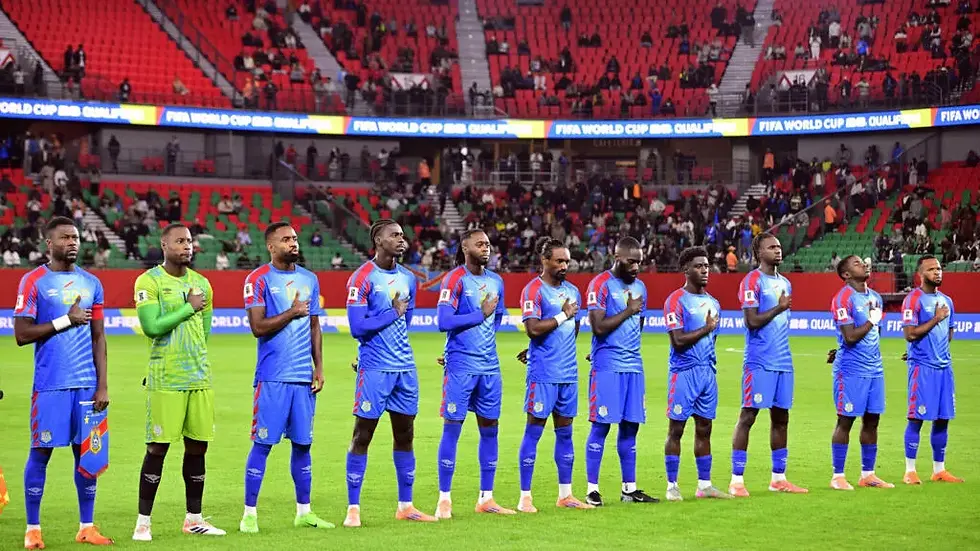
In late May of 2026, the Democratic Republic of the Congo’s football federation — in collaboration with FIFA — confirmed that its World Cup delegation is compliant with the U.S. protocols in place due to the Ebola outbreak.
Despite tangible concerns for a public health emergency with global implications, infectious disease experts have expressed that Ebola remains a low risk factor for the World Cup. The non-respiratory nature of Ebola weakens its ability to spread in ways that COVID and other illnesses have spread during high-population events. Nevertheless, experts articulate concerns about measles within the infectious disease community at present.
The public health community aims to maintain awareness of the potential medical concerns related to a high-traffic event like the World Cup, while also ensuring the tournament can take place safely.
Sky-High Ticket Prices
Astronomical ticket prices have sparked outrage among soccer fans and subsequently reduced demand for match tickets. FIFA’s president, Gianni Infantino, attributes the higher-than-average ticket prices to the organization’s adaptation to the North American market. His explanation continues to argue that the American resale ticket market forced FIFA’s hand, prompting it to mark up its own prices to remain competitive.
Even though FIFA has no direct control over the asking prices for tickets sold on resale platforms, the organization does profit from a 15% purchase fee charged to each ticket buyer and a 15% resale fee charged to each seller. Thus, FIFA earns 30% of each resale ticket on the market, creating a lucrative revenue stream across the 104 matches during this summer’s World Cup.
Beyond the exorbitant costs of resale tickets for the summer sporting event, the attorneys general of New York and New Jersey recently launched an investigation into FIFA’s ticketing practices. BBC Sport reported that some customers paid for tickets in one of FIFA’s price categories, yet were issued tickets of a lower value and further from the field (from a less expensive price category).
In totality, FIFA’s controversial ticketing practices and its acquiescence to the resale market have put access to the tournament out of reach for many of the sport’s fans.
Visa Issues & Immigration Concerns
Trump’s mass-deportation push and stricter immigration rules in the United States have heightened fears that international World Cup visitors could be targeted by U.S. authorities.
On June 4th, 2025, President Trump issued a proclamation suspending entry of individuals from 19 countries, citing deficiencies in those countries’ security screening and information-sharing practices. This order was expanded in December 2025 to include a total of 48 countries, with an exception that covers visas for athletes, coaches, immediate relatives of athletes, and people in a “necessary support role” for the World Cup. That being said, spectators from these countries will be unable to travel to any of the matches occurring in the eleven participating stadiums in the United States.
Four of the World Cup national teams face these travel restrictions — Iran, Haiti, Côte d’Ivoire, and Senegal. An additional 14 participating nations face a visa processing pause with the United States, meaning no new visa applications are currently being processed. With matches taking place in 11 stadiums across the United States, immigration and visa-related concerns are heightened for supporters directly affected by Trump’s recent immigration proclamations.

All three of Haiti’s group-stage matches occur in the United States, which puts excited Haitian fans at odds with their concerns regarding ICE’s [U.S. Immigration and Customs Enforcement] potential presence at these games. The United States, over the last few years, has seen an intensified presence from ICE harming immigrant communities throughout America.
With the U.S. Secretary of Homeland Security [Markwayne Mullin] declaring ICE’s presence at the World Cup, mounting fears among potential attendees are restricting soccer fans' ability to safely attend World Cup festivities.
According to a letter written by the Sport & Rights Alliance to FIFA’s president [Gianni Infantino], an asylum seeker who attended last summer’s FIFA Club World Cup was detained for a minor offense at the sporting event, handed over to ICE, locked up for months, and deported back to his country of origin. Many individuals and human rights groups worry that similar instances will occur this summer as well.
“Players on many national teams, including hosts U.S., Canada, and Mexico, are often immigrants or have immigrant heritage — football’s story is one of crossing borders and chasing dreams. But new U.S. rules and rhetoric slam the door of the world.” — Andrea Florence [Sport & Rights Alliance]
What Now?

FIFA’s mantra declaring that “football unites the world” appears to be faltering as we embark on the 2026 World Cup in North America.
Although many of these issues pose direct hardships and consequences for soccer fans around the world, they also impact the vendors in the World Cup’s host cities. Such a wide array of circumstances is preventing fans from attending the matches in sixteen host cities, all of which were expecting an influx of tourists this summer.
I am hopeful — as a soccer fan — that we will have a safe and exciting World Cup summer. However, it remains significant to consider the variety of factors affecting this tournament season.
---------------------
Sources:
https://www.roadtrips.com/world-cup/2026-world-cup-packages/venues/
https://www.cfr.org/articles/guide-countries-trumps-travel-ban-list
https://www.hrw.org/news/2026/03/12/keep-the-world-in-the-world-cup
https://sports.yahoo.com/articles/end-era-ten-players-set-131000151.html
https://www.npr.org/2026/05/28/nx-s1-5836514/2026-world-cup-fifa-ticket-prices
https://www.cnn.com/2026/05/25/sport/iran-mexico-fifa-world-cup-2026-intl-hnk
https://www.cfr.org/articles/the-u-s-is-co-hosting-the-world-cup-but-much-of-the-world-cant-attend
https://www.cnbc.com/2026/06/04/world-cup-2026-health-officials-focused-on-ebola-measles.html


Comments