.jpg)
The 2026 Midterm Elections

With 40 days until the 2026 Midterm elections, public discourse has emphasized the significance of the upcoming local, state, and federal elections. But what's at stake?

On Tuesday, November 3rd, the American people will vote for all 435 members of the House of Representatives, 35 Senators, 46 State Legislatures, 26 Secretaries of State, 36 Governors, and more at the local level. Schools, housing, AI policy, healthcare, voting rights, public transit, reproductive rights, the cost of living, and many other issues will shape the upcoming elections.
Historically, midterm elections, which occur halfway through every four-year presidential term, can shift which party controls Congress. Control of the Senate gives a party influence over presidential appointments to the cabinet, the courts, and senior positions in federal agencies. A political party in the House can also initiate impeachment proceedings and budget bills. A political party’s control over both the Senate and the House allows it to have significant influence over legislation and more actively thwart presidential actions.
Currently, the Republican Party holds majorities in both the House of Representatives and the Senate. Yet that could change in November’s midterm elections. Data from The American Presidency Project shows that the incumbent president’s party has had a net loss of seats in Congress in all but two midterm elections since the 1930s. The only two winners were Bill Clinton in 1998 and George W. Bush in 2002, and they both had sky-high approval ratings at the time. What will this data mean for this midterm election, especially since President Trump’s approval rating currently sits at 37 percent?
What are the Midterm Elections?
In the United States, midterm elections occur every four years, halfway through a U.S. presidential term. Midterm elections can shift the balance of power between political parties in Congress, creating ripple effects for the rest of the presidential term.
Generally, fewer Americans vote in midterm elections than in presidential elections. For instance, voter turnout hit a peak during the 2018 midterm elections with 50% of Americans participating in the election, which was the highest turnout for a midterm election since 1914. Even though midterm elections may have lower voter participation, the election's impacts remain potent.
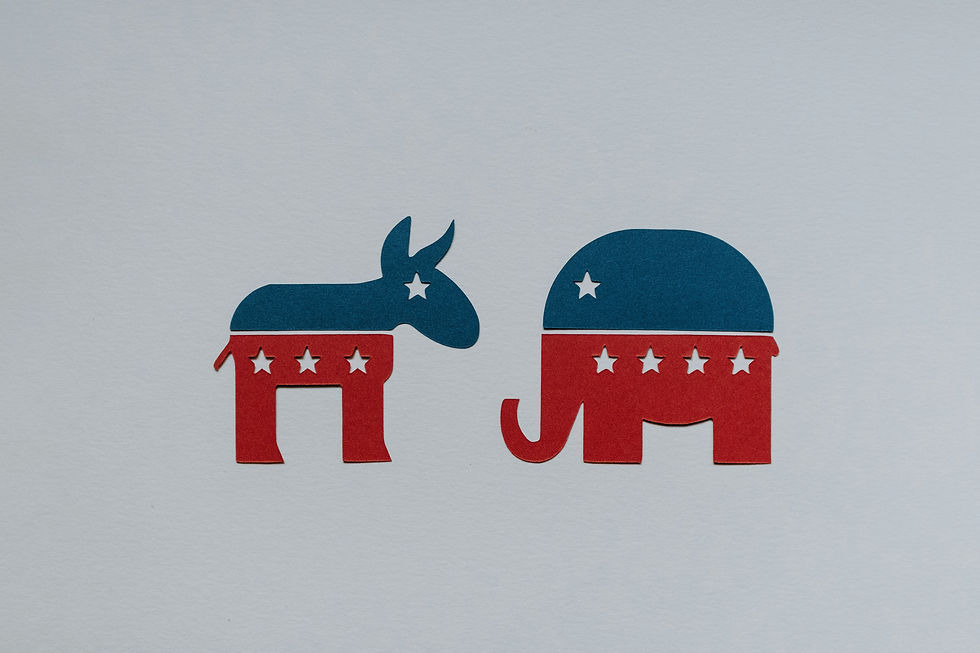
What does this federal election cycle look like?
Primary elections: March 3rd to September 15th, 2026
Election Day: November 3rd, 2026
Post-election period: November 4th, 2026 to January 3, 2027 (or later)
First day of the 120th Congress: January 3, 2027 (or later)
With so many congressional seats and gubernatorial roles up for election, this midterm election cycle has been top of mind in U.S. national politics over the last few months.

Many pollsters have indicated the Democratic Party has led the Republican Party so far in 2026. But national polling does not always correlate to the electoral results. More significantly, President Donald Trump’s approval ratings have fallen quite low in the lead-up to the midterm elections. The data resembles former President George W. Bush’s (Republican incumbent) approval ratings in 2006, which ultimately led to a large electoral victory for the Democratic Party.
In last year’s November elections, Democrats won numerous races up and down the ballot, from governor’s races to local races. Significant wins in governors’ races in Virginia (Abigail Spanberger) and New Jersey (Mikie Sherrill), mayoral races like New York City (Zohran Mamdani), and flipping two seats on Georgia’s Public Service Commission indicated great momentum for the Democratic Party. Continued momentum and increased control over Congress by the Democratic Party could push efforts forward regarding any investigations into the Trump family's business dealings, the Iran war, or other related matters. However, while launching such investigations might be easier, enforcing any actions or punishments will likely remain difficult.
After these elections, Congress will begin the 120th Congress in January 2027.
Voting Information
Although Election Day is Tuesday, November 3rd, many states across the United States have already begun early voting. In-person voting opportunities and absentee ballots follow schedules set by each state. However, everyone can vote in person on Tuesday, November 3rd, in each district across the United States.
Are you registered to vote? Check the list below to find out about the voter registration deadlines for your state.

Soon after the 2024 presidential election, voter eligibility, gerrymandering, and “secure” voting options returned to the center of public discourse.
The Safeguard American Voter Eligibility Act (also known as the SAVE Act) is a federal bill directly impacting the voting rights of American citizens. This new legislation would require voters to provide an additional layer of documentation for voting, alongside the existing verification system. Although the bill’s stated aim is to thwart noncitizen voting in elections, data does not show noncitizen voting as a significant issue right now. The SAVE Act would require voters to appear in person at an election office with qualifying documents to register to vote. Additionally, while voter registration itself wouldn’t cost anything additional, none of the required identifying documents for registration have a fee attached. As of now, the SAVE Act won’t be in effect for the 2026 Midterm Elections. Still, it contributes to the larger ecosystem surrounding the upcoming elections.

Over the past two years, ten states (Alabama, California, Florida, Louisiana, Missouri, North Carolina, Ohio, Tennessee, Texas, and Utah) passed new congressional maps that redrew their district lines. These actions are generally considered abnormal, as redistricting typically happens directly after the U.S. census every 10 years (most recently in 2020). This all kicked off after President Donald Trump asked Texas to redraw its district lines to benefit Republicans in upcoming elections. Missouri and North Carolina made similar moves as they aimed to gain more Republican seats in Congress. Democratic-led states ultimately responded by attempting their own redistricting. Electoral analyst Kyle Kondik said that while these gains for Republicans are significant, they likely will not be enough to secure their desired control of the House of Representatives.
Things to Consider
Leading up to the 2026 Midterm Elections, a wide variety of factors will influence decisions made at the ballot box across America. The state of the U.S. economy, reproductive rights, immigration, health access, and more will directly and indirectly shape which candidates the public supports. With so much information consistently being platformed on the internet and in news media, I have included some resources related to this upcoming election cycle that might be helpful.
This list, compiled by Ben Sheehan, details all of the Congresspeople who financially supported ICE and CBP and are on the 2026 ballot.
Link to Ben Sheehan's Spreadsheet: https://docs.google.com/spreadsheets/d/1ywPLlXPgi9gT3UMkJLQlHFzACjjJ7xUU9cuyvxR1N7k/htmlview
Ballotpedia is an incredible resource covering American elections at all levels. Their “Election results, 2026” page tracks all aspects of the Midterm Elections, with additional information for each state.
Vote Smart: Facts For All offers a wealth of free, factual, and unbiased information on candidates and elected officials up for consideration this November. You can either search for information on a specific candidate or use their tools on legislation, issues, interest groups, and more.
Now more than ever, it is critically important to safeguard American democracy from the corrupt governance of Donald Trump and his Republican Party. Acknowledge that those aligned with Trump will likely wield whatever is necessary to maintain control of the election. A potential ICE presence at polling locations, declaring absentee ballots invalid, and creating a landscape of chaos surrounding the elections are only a few methods that might be deployed over the next few months. The 2026 Midterm Elections will not be simple or easy, but that does not detract from their significance.

---------------------
Sources:
https://docs.google.com/spreadsheets/d/1ywPLlXPgi9gT3UMkJLQlHFzACjjJ7xUU9cuyvxR1N7k/htmlview
https://www.cbc.ca/news/world/why-us-midterms-matter-trump-9.7333011
https://www.nytimes.com/interactive/polls/trump-approval-rating-polls.html
https://www.chathamhouse.org/2026/09/what-us-midterms-could-mean-trumps-power
https://www.politico.com/f/?id=0000019f-b639-d400-a3df-f7fbd35e0000
https://bipartisanpolicy.org/article/the-2026-midterms-key-dates-and-events/
https://thehill.com/homenews/campaign/5662518-redistricting-war-congress-2025/
https://ballotpedia.org/Redistricting_ahead_of_the_2026_elections
https://centerforpolitics.org/crystalball/the-2026-house-map-versus-2018/


Comments